



Note: the AI industry is rapidly changing, please keep in mind the publication date of May 27, 2026 while reading. We’ve been sourcing this for awhile, and some of the posts we started with were out of by the time we were ready to publish. Life moves rapidly… and the machines move even faster!
What really is AI? And what is it doing…
When The Pope weighs in on something, you know we all need guidance. And whether you are a believer or not, Catholic or of another faith, we can be thankful that some world leaders put in a great deal of thought to this world we live in and how we might best grapple with the challenges we face.
And FWIW, I for one am with Leo on this one. I side with humans and all that makes us beautiful.
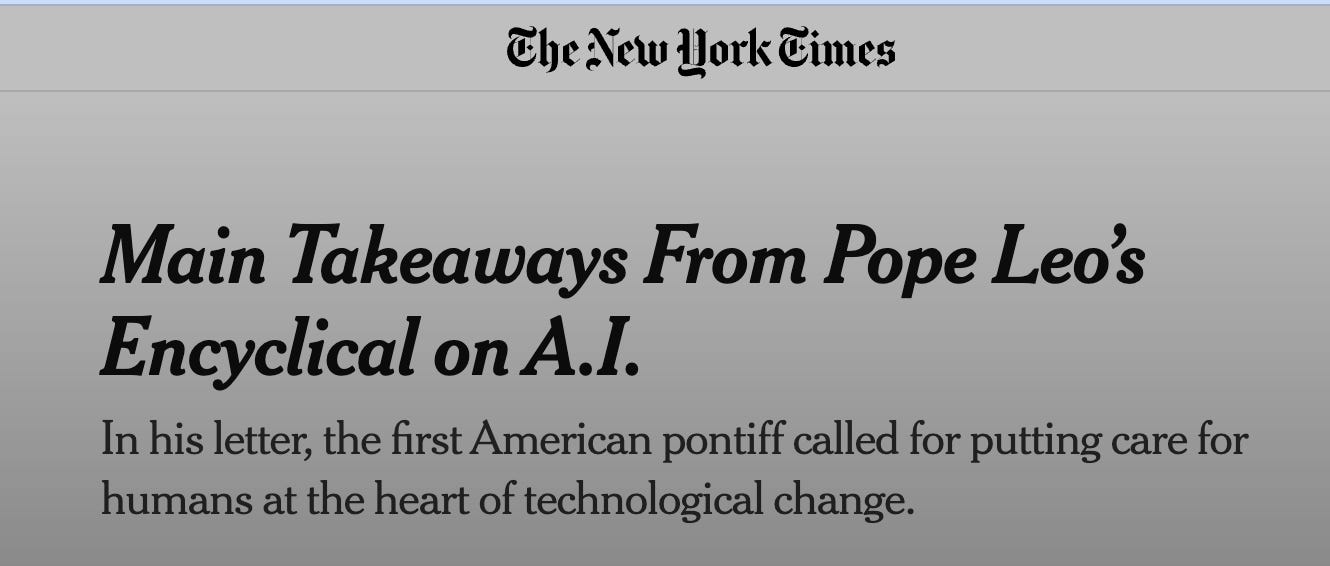
Magnifica Huminatas, indeed!
Even taking all of that into account, particularly the dignity of us, the every day worker… how are we supposed to then go forward?
We can’t run from it. Best to get to know it?
Yeon Jin Lee used her spot on the Inspo Challenge to give us a basic primer on AI and how she’s using it as a NonDē filmmaker.

But as Jon points out, don’t be surprised though if AI rubs you the wrong way…

I mean after all The Youngs are now booing it’s very mention…
The question for us cinemakers perhaps becomes “How do we use it and why?”
And yes, it’s really good to see some folks being fully honest about it… particularly when many others are not.

Some will master it… and some already have.
And to be clear… in case it wasn’t obvious… this is happening EVERYWHERE right now.

It isn’t just the FKATheFilmBiz that will have its world turned upside down (again).

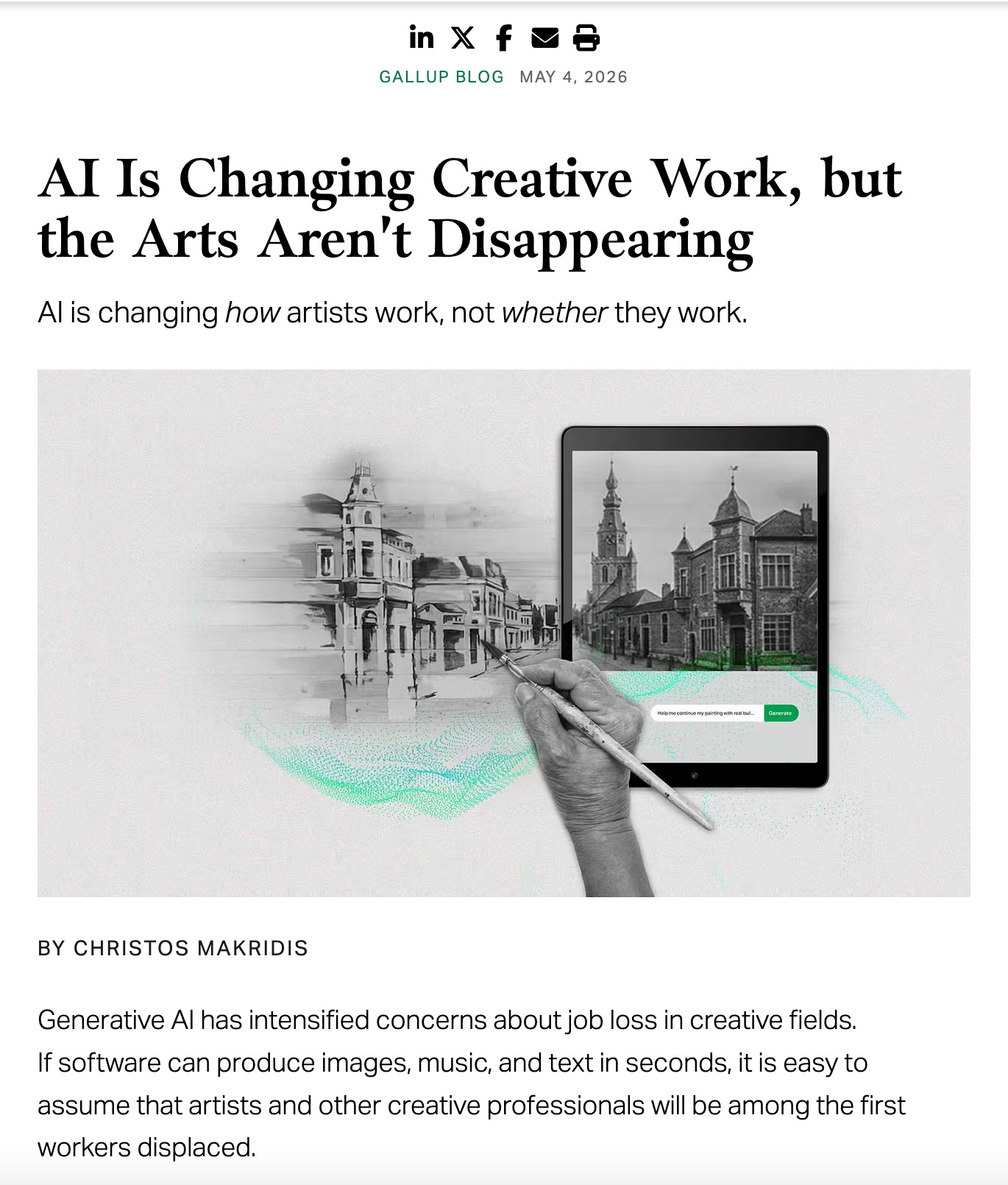
Maybe it will NOT cost us all our jobs, but only change HOW we do them—at least that’s the takeaway of a recent Gallup poll:
As we pointed out at the top of this post, it certainly feels like you can’t run from AI.

Not long ago, consumers were invited to purchase hot new tech products, and were excited about the opportunity. Not anymore. Now AI is forced on us everywhere.
Instead of customer service, I get a bot, not a person. When I stream music, bot slop is served up by the platform. When I want to write an email, a bot intrudes. Microsoft not only bundles unwanted AI with its software, but then forces a price increase on me for the privilege of using something I don’t even want.
This is stirring up an intense backlash from the general public. But will AI companies read the room? Or will the force-feeding of AI continue?
Or can you?
Across the US, more than 300 bills restricting data centers have been introduced in states and communities. At least 14 states are considering total moratoriums. And in places where politicians hesitate, the public is stepping in—putting voter initiatives on the ballot.
(TH)
… Hollywood’s Job Market?
Stephen Follows goes through how AI is already altering day-to-day work for filmmakers.

And Erik Barmack writes about the middle class’ vulnerability, particular to Anthropic’s Claude:
“Studios don’t need to announce “AI replacements” for this to matter. They simply stop hiring for tasks Claude can already perform. The creative top — the stars, the showrunners, the marquee talent — remains intact. The middle — readers, assistants, junior development execs — thins out. Development pipelines accelerate, decisions happen earlier and risk is filtered faster.”

And just in case you forgot, remember it was Anthropic that first stole everyone’s books and all they contained.
Theft is theft though, and they had to pay out.
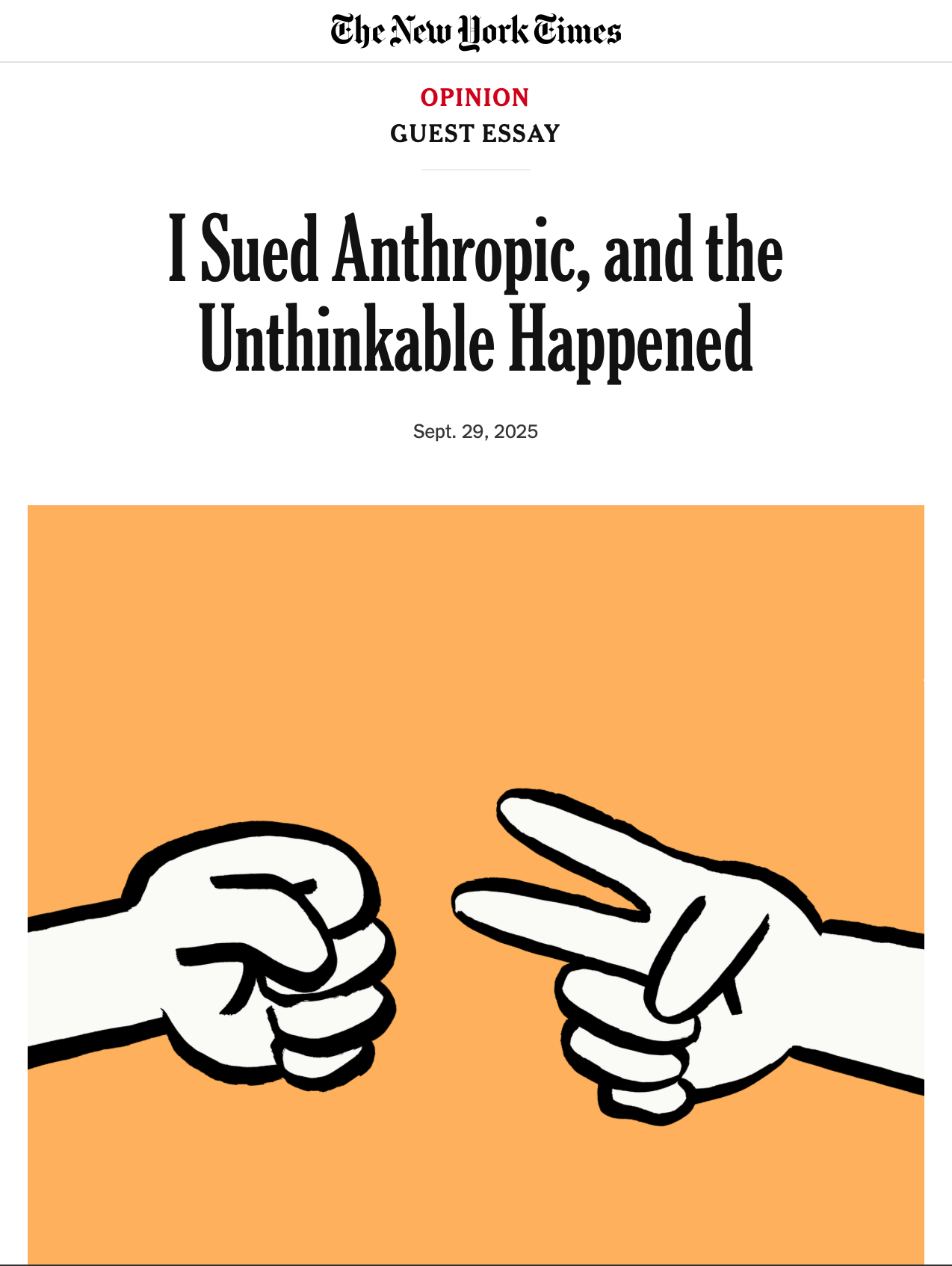
Have Anthropic and the other AI companies already done the same with our movies?
(TH)
… Filmmaker Workflows?
Is the future of filmmaking as we know it on the line?

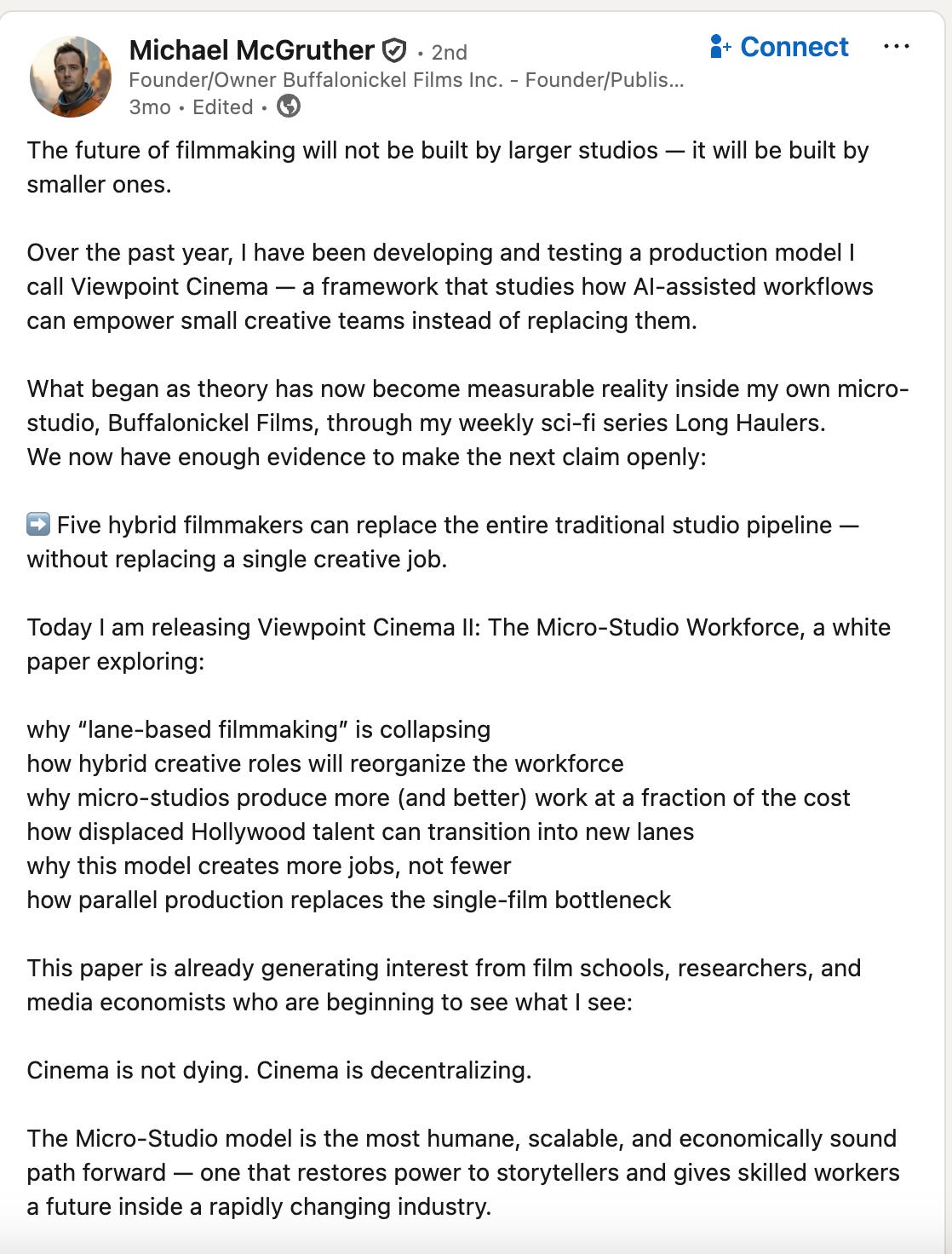
…. what is it doing to our entire ecosystem???
Many of the Hollywood Bigwigs have taken AI money when they could:

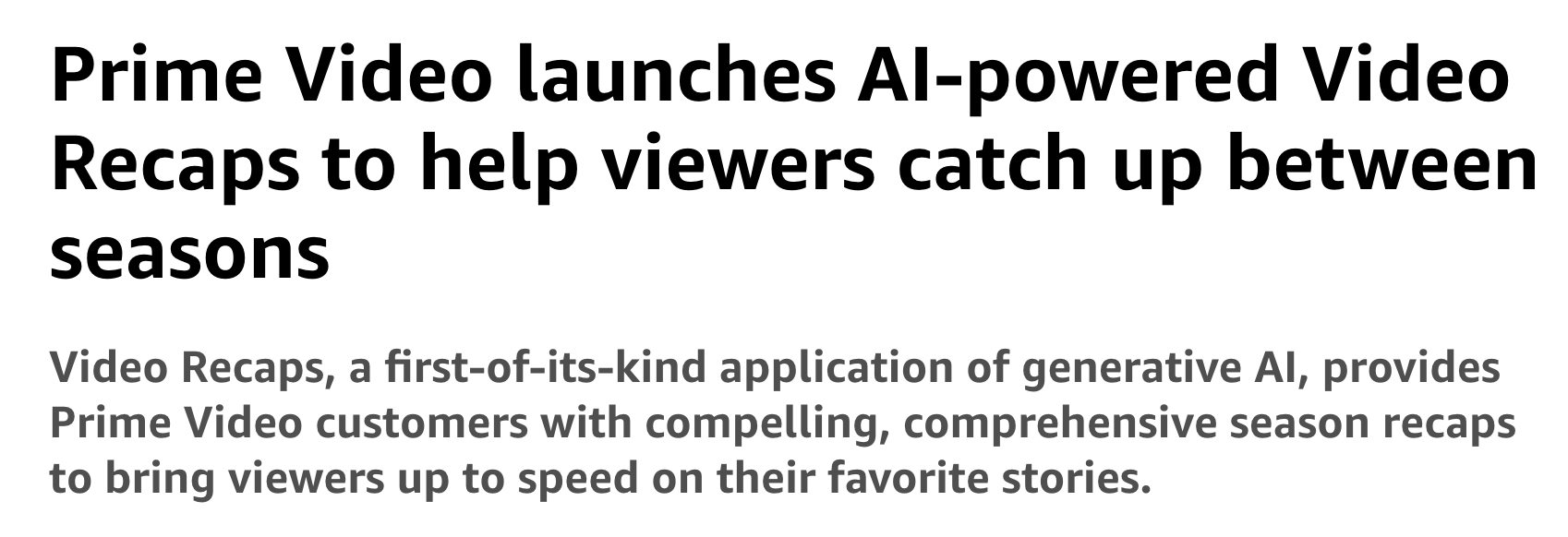
After all, Amazon is all-in on AI
Stephen Follows looked at 7,423 Amazon video-related patent filings to uncover which technologies are most likely to reshape how films are developed, produced, finished, and distributed. And AI is ever-present!
At least we don’t have to watch their shows anymore! We can just watch their AI recaps.
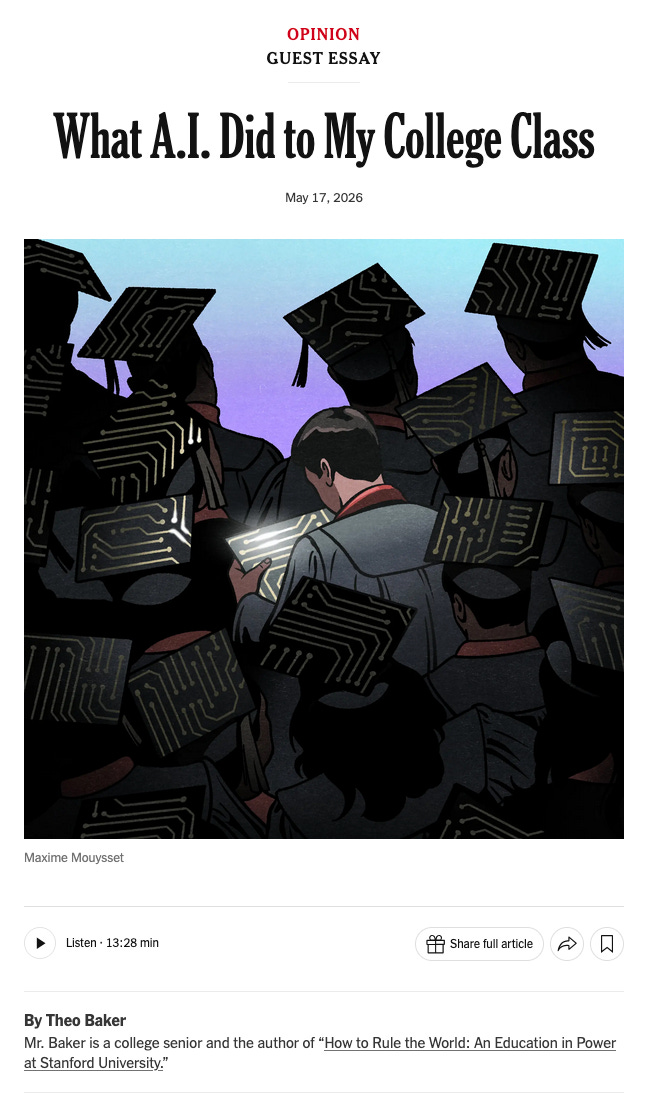
… and what about Higher Education?
(TH)
So let’s look at:
The Case Against AI
https://www.technologyreview.com/2025/05/20/1116327/ai-energy-usage-climate-footprint-big-tech/
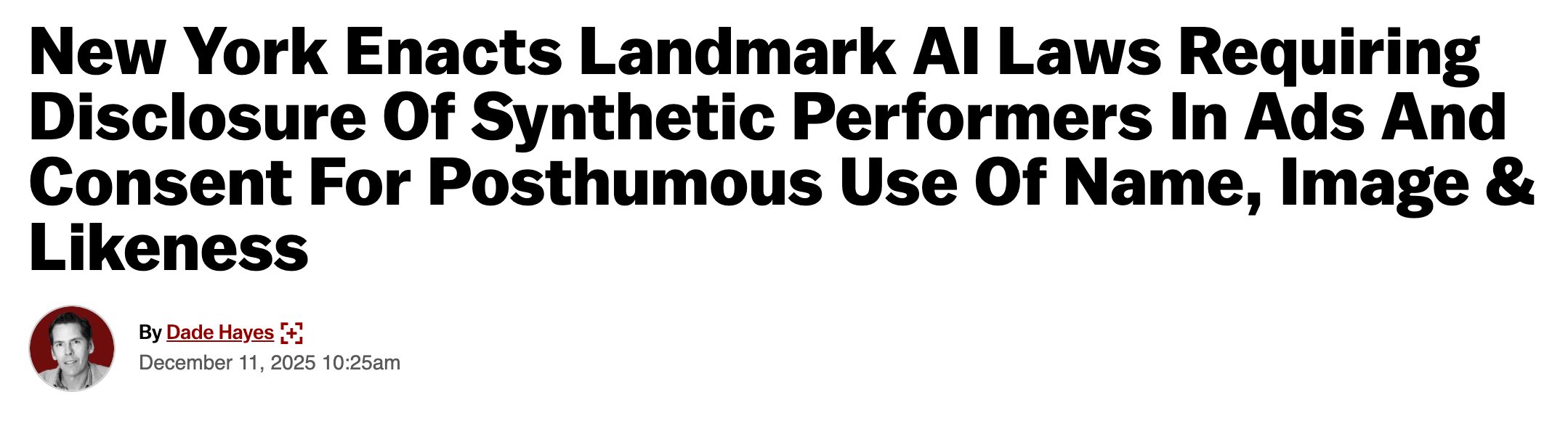
1. Okay, so you were going to have Marilyn & Jimmy Dean star in your new slasher spectacular, eh?
Better know the ever changing rules.
2. AI generated films are “empty”

In this article by John Semely featured in Wired, called “I Saw The Future of AI Film and It Was Empty”, he discusses his experience attending an all AI Film Festival and the questions for the future of its use in filmmaking that it raised, such as:
As something of a generative-AI skeptic, watching the program raised all kinds of questions. Some of these were pretty pedantic and boring. Like: Does standard movie theater etiquette (re: looking at one’s cell phone) apply during an AI film fest? You could imagine a computer filmmaker might actually like to see another little computer, lighting up in the dark theater, as if approvingly.
Other questions were a bit more existential—or, perhaps, ontological—relating to the very nature of so-called “AI art.” Even when these films were entertaining or nice to look at, I couldn’t help but feel a little tricked. Aren’t those qualities mere impersonations of real films, painstakingly made by real people? And so, aren’t even the “good films” still fundamentally bad?
https://www.wired.com/story/cream-of-the-slop-an-ai-film-festival-screening-left-me-with-more-questions-than-answers/
(AS)
The Case for AI (in some capacity)
1. Is it all a matter of how we use it?
Zack Arnold takes a look at the different areas of the creative process where AI tools can be useful or helpful, but then draws the line on where he believes we need to step up and do the work ourselves.
In order to remain the masters of our technology rather than becoming the servants to our robot overlords, we must devise a comprehensive set of rules to clearly delineate where to safely collaborate with the machines as opposed to cognitively offloading the entire creative process. Otherwise we risk leaving ourselves unable to string a coherent thought together on our own (and nobody to call for help because we can’t remember their damn phone numbers!). Because without these rules, once AI enshittifies (and AI is going to enshittify HARD), we’ll be f•cked.

(AS)
2. Could there be an equal and opposite reaction to the machines by all us humans?

Moving Forward
What should the rest of us do about AI?
Fortunately for you, The Ankler did an overview recently of what does what and why:

If you’re making a documentary, follow these best practices
Best Practices for Use of Generative AI in Documentaries / ARCHIVAL PRODUCERS ALLIANCE, September 2024
Remember: AI use will change you and the things you do
And it is going to happen faster and faster and faster.
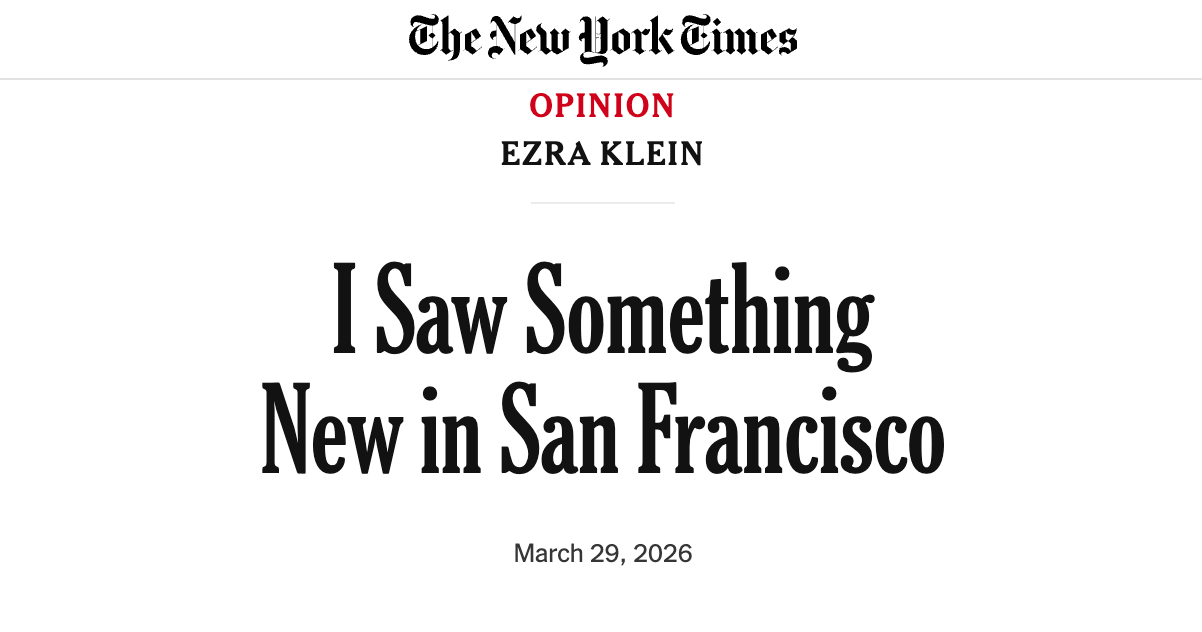
Klein spells out what many of us feel; anyone who has engaged in any creative process for an extended period time recognizes that what we do and the way we do it is a determining factor on the outcome. I particularly like the focus on the difference between “cognitive offloading” and “cognitive surrender” — but still feel regret on what is lost in the offloading, and not just the surrender.
As someone who wants to feel our cultures evolve as I explore them, I can’t help but feel it is the widespread cognitive surrender that has put the breaks on the rapid change that we once might have enjoyed (or refused). I get that others may not like the immersion in something new when it finally occurs, but that is not me.
The choice to embrace the machines that Klein documents is not the world I have dreamed of, but the one where we recognize how we have to free ourselves from the Narcissistic Trap is. I think we are currently appreciating only a small fraction of what we will one day know how to love, but that is just me.
Free gift article here.
(TH)
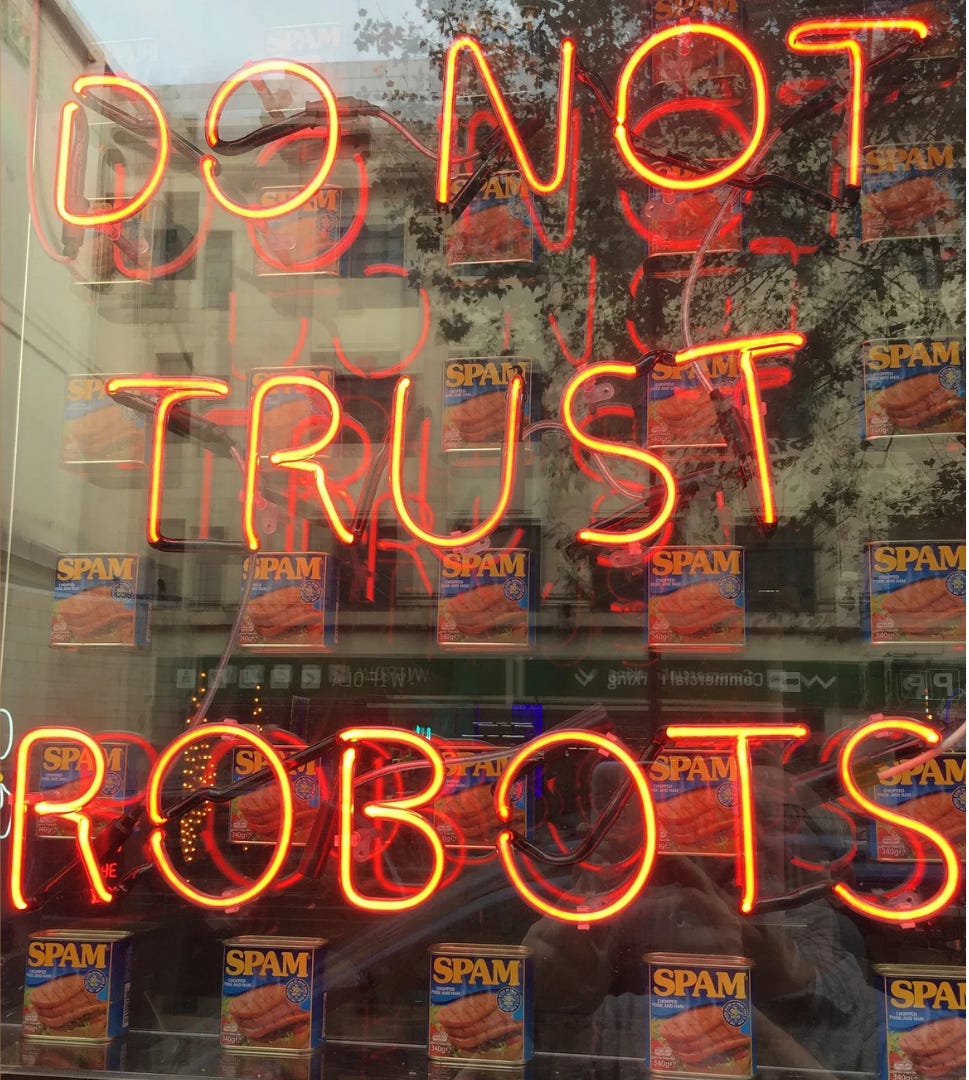
In an attempt to help out, I realized doing this comment turns out to be highly appropriate to the subject matter of the deep dive itself.
Since Ted's photo is captioned, "not sure where I shot this, but I sure do wonder where. (TH)" I thought I'd help out. I dragged the photo into a google image search (click that little camera icon in the search bar and drag and drop,) and got a quick result telling me the artist that created the work is Eve De Haan, a London based artist that often uses neon text in her commentary artwork. A few clicks later I found her official site https://www.halfaroastchicken.com/ (The site name itself has an interesting backstory into her approach to her art as well.) Going to her Exhibitions section we can find that the work was first created for Art Miami 2022.
While properly associating appreciated art with the artist who made it is a laudable goal to strive for in and of itself, I have to confess that the search was made infinitely easier by the integration of AI in the search processes for me. Image search itself is substantially more accurate and able to find simularity in various sourcess much better than it used to be limited to.
Of course, you still have to follow the leads to the origins to be truly accurate. (There are hundreds of photographs of the artwork simiilar to Ted's in various locations where the artwork has been situated which gang tackles the subject of the search.) There were some misleading links that had to be fereted out among the returned results. But, I was able to navigate through to the proper attributions and verify by my own eye the true original artist who made the work.
AI was helpful as an "assist" in this case. I'd never trust what I get from AI as an end to a means. But as a means to an end, with discernment and human intelligence in the mix, it can be of great help.
What’s important to me is the process. AI seeks to reduce the process. I want to spend the time figuring out what I think, not what AI thinks based on the training data it was given. I want to enjoy art where the artist has taken the time to figure out what they think.
What AI is very good for us looking for patterns in huge sets of data and approaching that data differently than humans would and this could be very useful for some avant guarde storytelling but that’s kind of academic. I imagine it’ll be able to churn out formulaic movies like crazy but how much appetite do we have for this and how long will it take to pare down “the movie” to some anomalous platonic anti-ideal we’re all tired of? I think it’s good news for indie artists because it’ll hollow out the corporate model, which people are already tiring of, and we’ll go looking for something original.
But even that all aside — AI doesn’t flow like human art does. That’s the tell for me. In writing it’s a lack of understanding about the musicality and flow of a sentence that comes naturally to people who learned language verbally first. I actually find it really disorienting because it’s a mental off-ramp disguised as natural speech patterns. You end up out of the story in the way non-sequiters and tangents take you out of the story, but the story is still on track and there’s no markers to bring you back on board. I can’t see a machine ever being able to fully emulate that because it’s just not how they work and it’s a thing WE have a hard time communicating because it’s so natural to us.