

On Micro-Budget Films and How to Make Them
A treasure trove of advice from the filmmakers who have been there and done that.



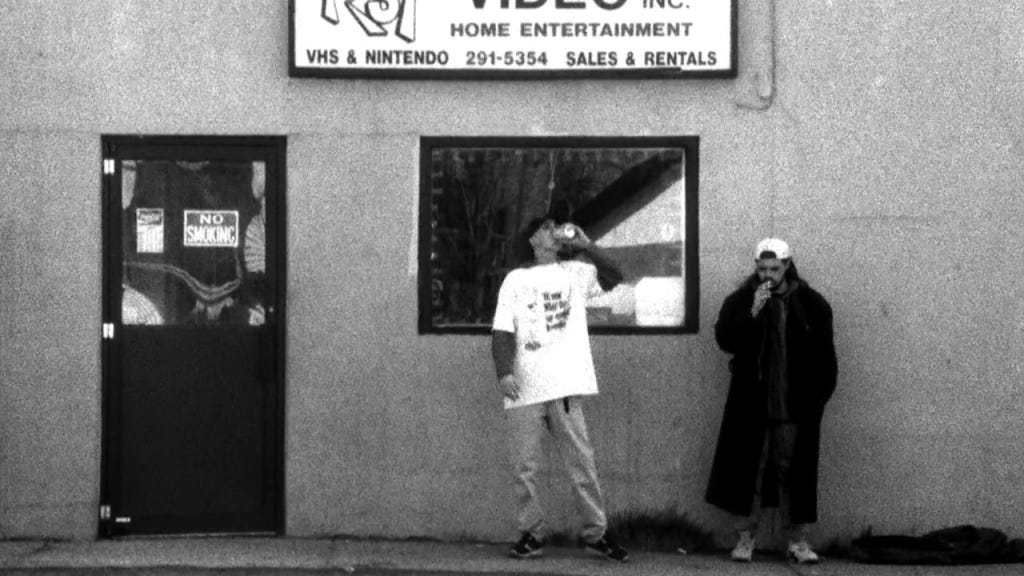
What is microbudget filmmaking?
I’m sure that most of you reading this already know, but we’re gonna sum it up for you anyway.
Microbudget filmmaking is exactly what it sounds like: making a film with very little money. These films often rely more on creativity, resourcefulness, and determination than on funding to get made. There’s no strict number that defines a microbudget, but it usually means working with whatever you can realistically afford, sometimes a few thousand dollars, sometimes even less. Instead of big crews, expensive equipment, and controlled environments, microbudget filmmakers use real locations, small teams, favors from friends, and a flexible mindset and willingness to adapt when things don’t go as planned.
What makes microbudget filmmaking interesting is how those limitations shape the film itself. You write scripts around what you have access to, you solve problems on the fly, and you make choices that prioritize story and execution over scale. It forces you to be intentional. Every decision matters more because you don’t have the safety net of money to fix mistakes later. Some folks believe it’s one of the purest forms of filmmaking, because it forces you to figure out how to tell the best story you can with the resources you have right now.
(AS)
Microbudget History
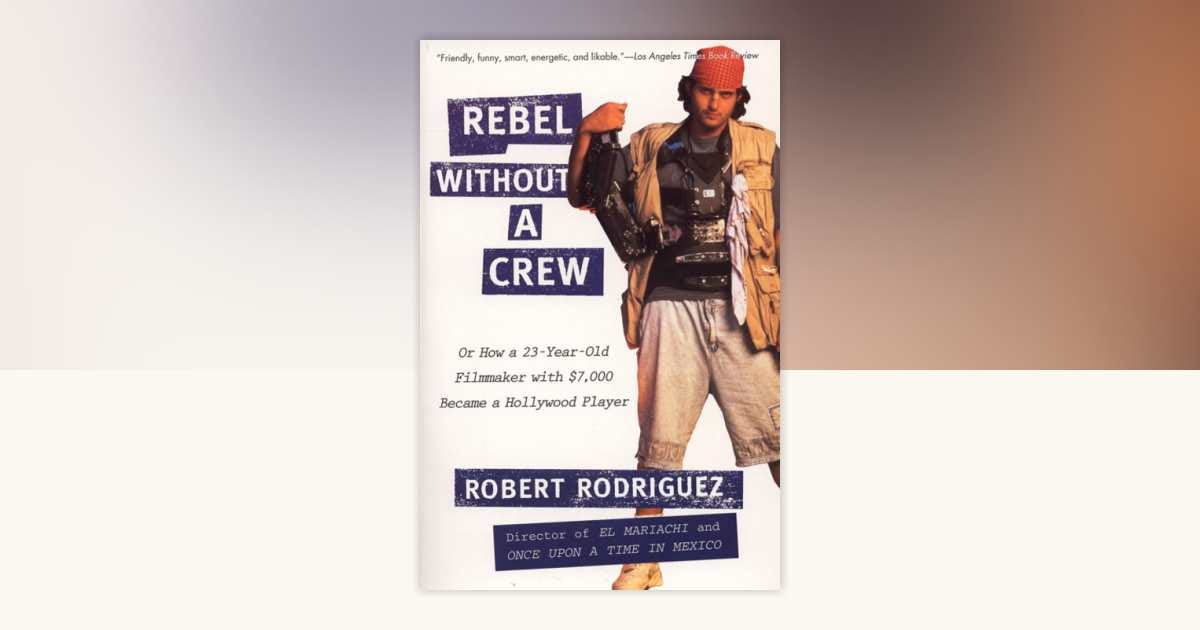
In 1995 director Robert Rodriguez wrote a non-fiction book called “Rebel Without a Crew” all about how he made his first feature film, El Mariachi, on a $7,000 budget. It still serves as a good guide for aspiring filmmakers, sharing many tips and techniques, even includes his “Ten-Minute Film School”. The book is a great read and truly inspired a whole new generation of filmmakers to look at filmmaking in a new way and to stop waiting and go out there and make their films.
(AS)
Microbudget Watchlist
We do have over 100 films from around the world in the microbudget arena to add to your #ToWatch list!
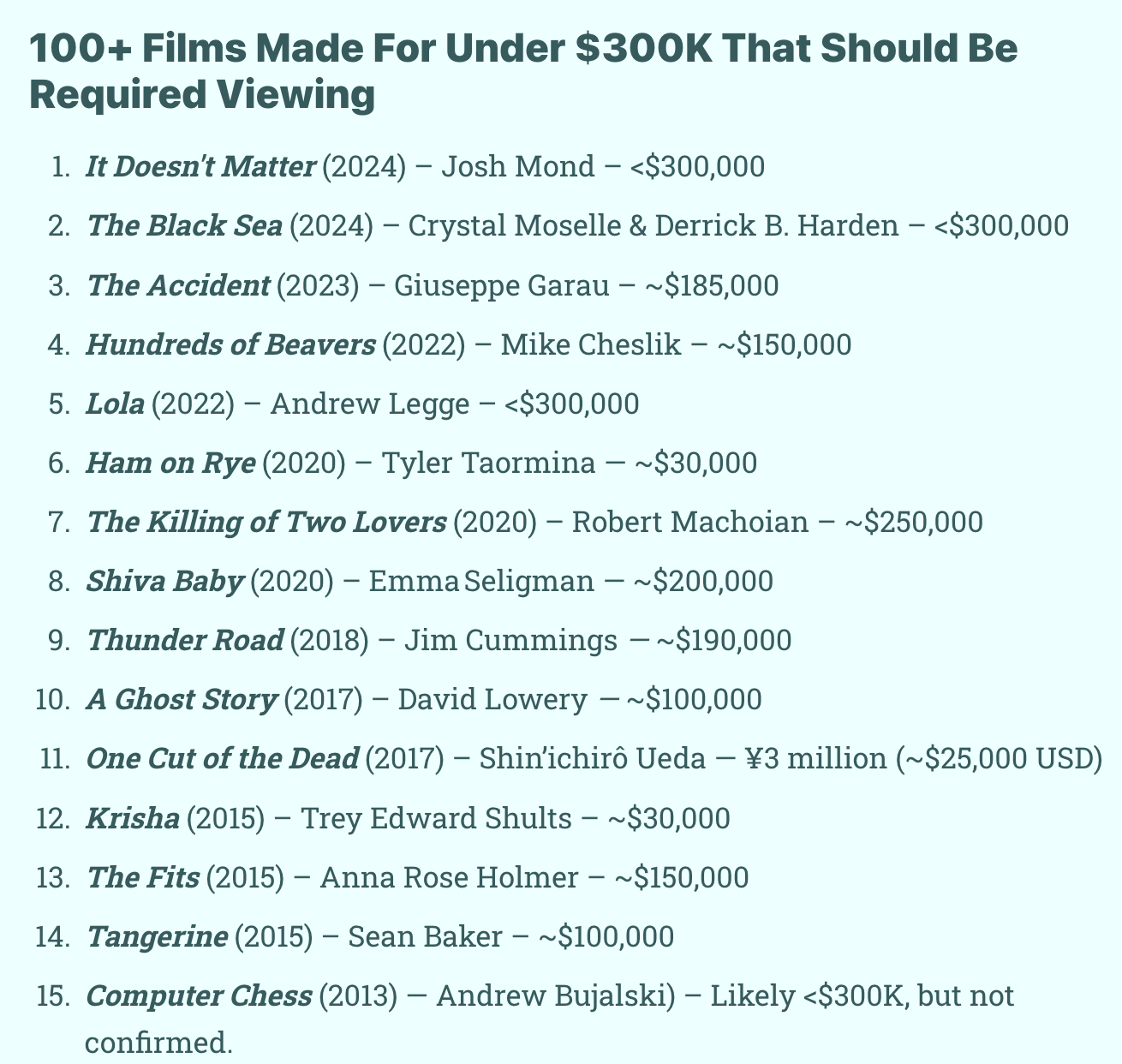
Full list here:

And on Letterboxd here: https://boxd.it/Ta07s
Of course perhaps the ceiling here ($300K) should be lower? Perhaps we need a similar list for the under $100K? The under $50K?
(TH)
Why make a microbudget film?
One of the biggest reasons to make a microbudget film is that you don’t have to sit around waiting for permission. You’re not spending years chasing funding, pitching to people who might pass, or getting stuck in development hell! You can just go make the thing. There’s no gatekeeper telling you no or trying to reshape your idea into something safer or more “marketable.” You get to make the exact project you want to and this lets you actually figure out your personal voice instead of guessing and trying to do what other people want.
It also helps you build momentum for your career way faster. Instead of putting all your energy into one project that might never happen, you can make multiple films, learn from each one, and get better every time. You develop and learn to trust your instincts, you learn to better solve problems on the fly, and you get comfortable and sometimes more creative because you are working only with what you have.
Many FilmStackers fully embrace this type of filmmaking.
Liz Manashil is one and she shared her Microbudget Manifesto:
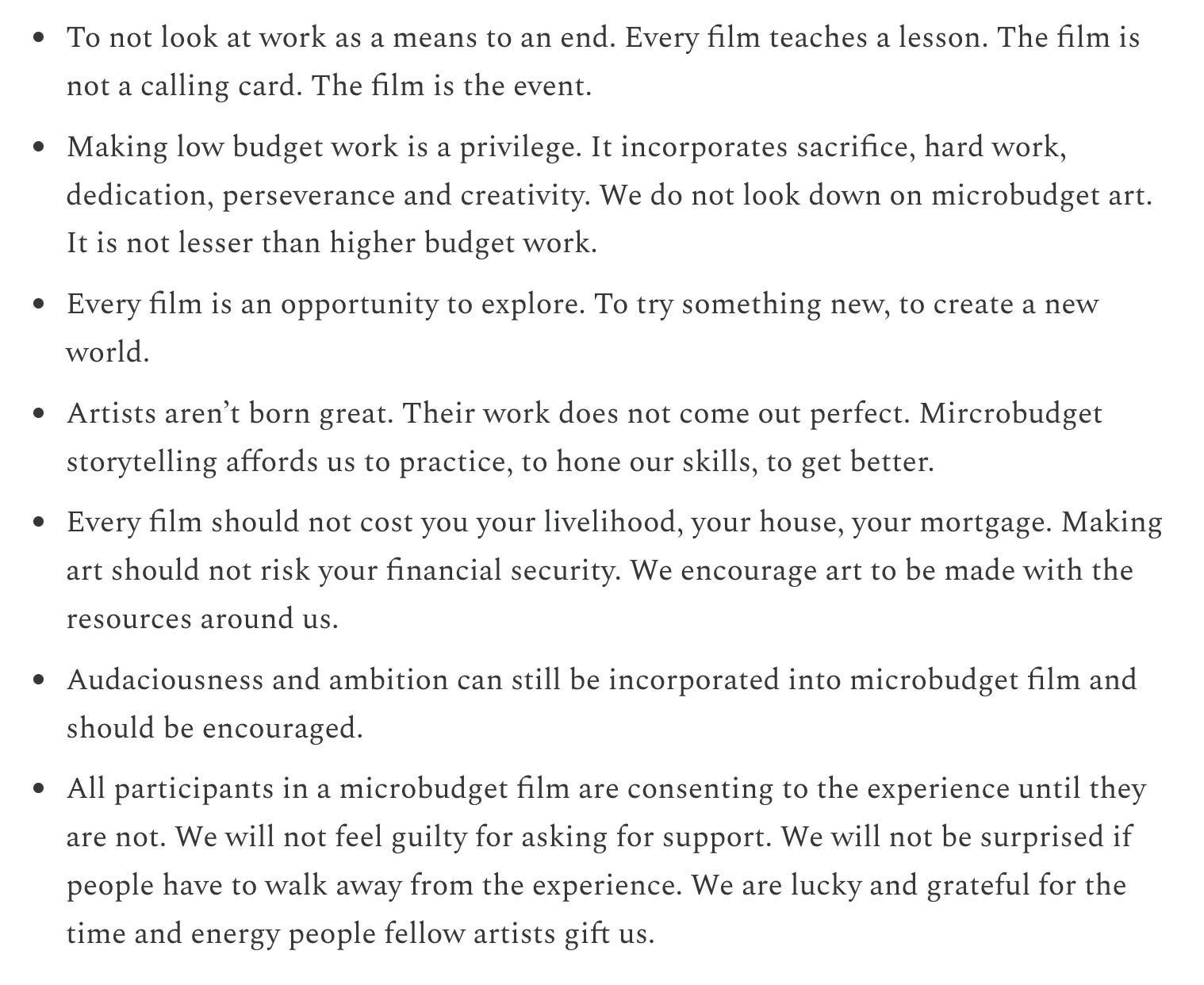
Read her whole article here:

With the way the “industry” is crumbling and financing becoming more difficult to secure, microbudget filmmaking might be the only direction the business can go right now. The current landscape is forcing more people to step around the system entirely. Making smaller films, keeping control, and actually finishing projects instead of getting stuck in limbo. It’s not ideal in the sense that everyone suddenly has less money to work with, but it is pushing things in a more scrappy, creative direction. In a weird way, it leven evels the playing field, because now it’s less about who can raise the most money, and more about who can actually make something compelling with what they have.
As Avi Setton points out here in this interview on his NonDē Uprising with Jen Harrington, “a lot of people are ready to use limitations in a positive way because we are in need of seeing that example”.

Even filmmaking non-profit institutions such as Film Independent are talking about microbudget as being the future, in this series of panels NanoWave: The Microbudget Film (r)evolution.
Felix Werner, discusses the experience there in this post:
I’ve made microbudget movies. I truly believe that ultra microbudget is the only future for actually independent film (or NonDē, as my friend Ted Hope likes to call it, but I have trouble typing). And even I’m impressed that they were able to shoot a film for that much.

(AS)
How do you make a film for close to NO money?
Way back when, in the good ‘ol ‘90’s, me and my Good Machine comrades wrote up a few recommendations:
Today, we can’t do anything without a lab, can we? Well, they are starting microbudget feature labs out in Georgia:
https://ung.edu/news/articles/2026/02/micro-budget-film-lab-announces-first-features.php
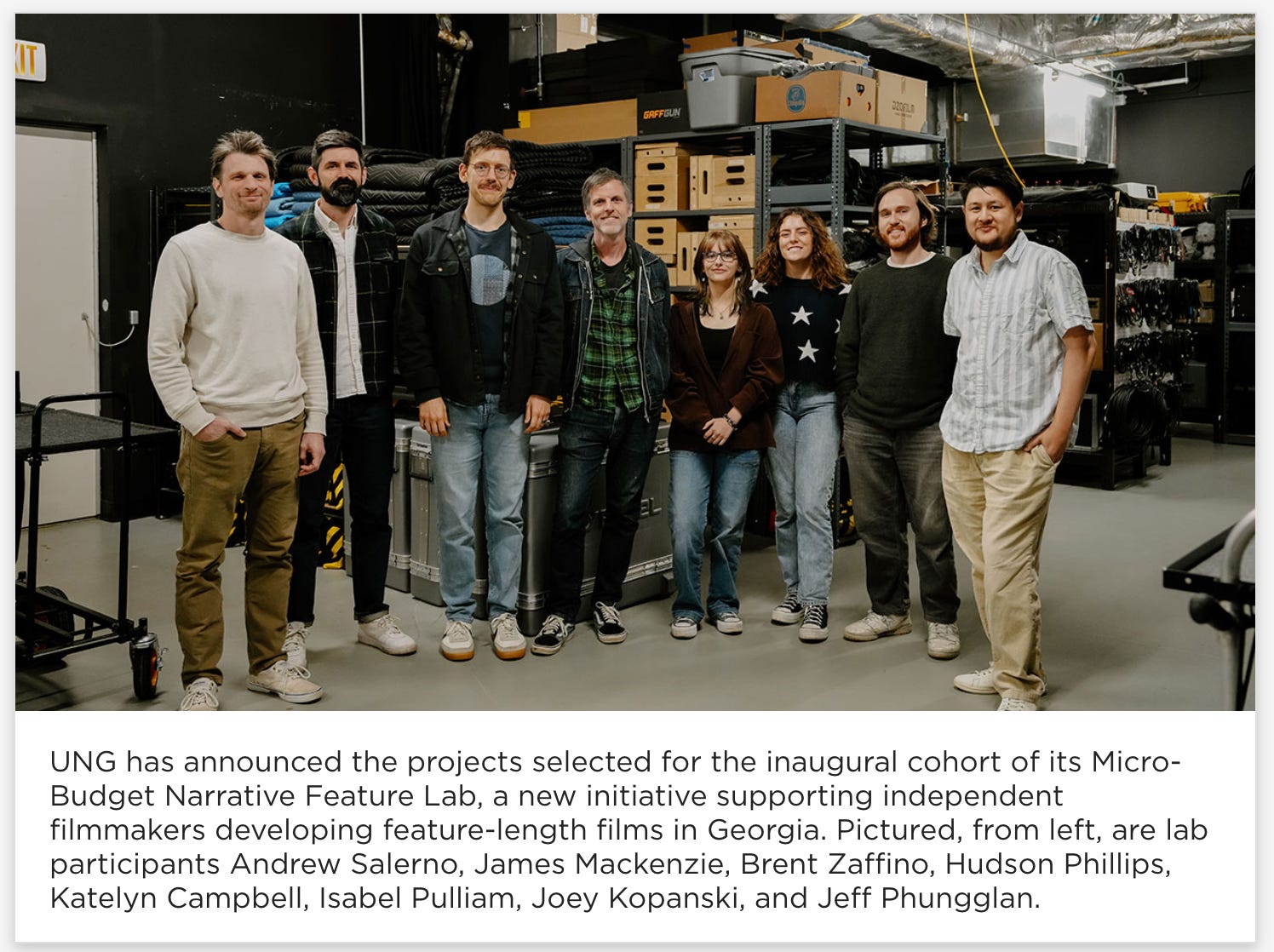
Several of the chosen participants are here on FilmStack:


Just ask Pete Ohs!


How low can you go?

How about a feature-length doc for less than $10K?

Doing > Planning
In the old fashioned route of making an independent film, filmmakers spend years waiting and in that time they do a lot of planning. Microbudget filmmakers turn that planning into doing.
Like Courtney Daniels:
Recently I’ve arrived at the same place I always do: it’s better to make a movie than not.

And Ari Gold:
I prefer a declaration, which doesn’t care if you’re tired or uncertain. It’s a stand you take: “This film will exist.” It’s the difference between being an observer of your life and being the director of it.

Let’s make 2026 the year where we just do the thing, not only for ourselves, but for all the time we sacrificed waiting for things to change, before realizing that we are the change.

And Leena Pendharkar:
I like making films at this scale. You get to work with the people you want, tell the story you want to tell, and actually make something instead of spending years talking about making something. There are a lot of compromises, of course, but it’s also freeing!

How do you make it not look like a microbudget?

A New Mindset
Taking a microbudget approach can be the most freeing thing you can do, opening yourself up to focusing on the things that matter most to you in your process.
Courtney Daniels also made this short video reminding us not only how liberating microbudget work can be but how it can open you up for the possibility of success, by being able to try things different ways until you succeed.
Myth Busting
People tend to think the bigger the budget the better, I mean with more money you can do whatever you want, right? Not necessarily. In reality there’s often a clarity, beauty, and a special kind of freedom that comes with shooting microbudget films, that money could never buy and Mauro Mueller / El Suizo breaks down all the reasons why.
When people say “microbudget,” they often mean no budget, big dreams. But there’s a mythology around low-budget filmmaking that doesn’t always match reality. Some think it’s chaotic. Others think it’s messy, amateur, or even reckless. The truth? It can be liberating. And also brutally honest.
It is NOT Exploitation
Unfortunately, micro-budget filmmaking really makes some people angry because they feel that since these productions can’t pay big wages that they are taking advantage of their crew. This is a dangerous myth and one that Donny Broussard discusses in detail here.
I want to draw a line in the proverbial sand about ownership, sustainability, and the right of people to build films outside of the traditional labor structure without being treated like unethical monsters.
(AS)
Case Studies
One of the most useful ways to learn how to make a microbudget film is by reading as many case studies as possible. Looking at what other filmmakers have actually done, how they’ve solved problems, stretched their resources, and made things work with almost nothing, gives you a much clearer picture than just the theory ever could.
When you study these examples, you start to see patterns: the creative shortcuts, the unconventional decisions, and the smart trade-offs that make microbudget filmmaking possible. You don’t need to copy what they did, it just helps to understand why it worked and how they adapted to their limitations.
Then you can take those insights and apply them to your own projects in a way that fits your situation. Every case study you read adds another tool to your toolbox, another perspective, another idea you might not have come up with on your own.
Luckily on FilmStack we have many microbudget filmmakers sharing these case studies on a regular basis.
Donny Broussard understanding the value of these case studies has created a whole series of microbudget case studies, as he states:
For a time I was posting about things that I’m into on Fridays, but I’ve decided that I want to provide more value than that to the few people that are reading this Substack. So, starting today I am going to be posting micro-budget case studies on films that you may or may not have heard of and share everything that I’ve learned about said films.
You can find all of them on his stack Punk Rock Producing:
Hudson Phillips whose film Guacamole Yesterdays is the first case study that Donny Brousard did (above) is another microbudget filmmaker who undersatnds the value of sharing case studies, he has the stack Mirror Box Films, as he states in this post:
I’m constantly on the search for how to make films higher concept, lower budget, so I knew I had to interview Steve to see how they pulled this off.
(AS)
Before we go: a special shout out to Courtney Daniels, Donny Broussard, Hudson Phillips, and Shawna Carroll, who continue to write about microbudget filmmaking with honesty and care. The FilmStack community is better for it.
This is a treasure trove of article I can’t wait to dig into. Thank you for putting it together.
What an AMAZING collection of advice, case studies, and real people actually making it happen! So honored to be a part of this, not just the conversation, but the movement! Who is joining us?? ❤️